 In 2005 my husband and I visited Zakynthos, in Greece, for a friend’s wedding. It turned out to be a fun and interesting week. As well as celebrating a traditional Greek wedding, my birthday fell in the same week and I also had a great opportunity to catch up with family, who lived on the island, that I hadn’t seen for a while. As soon as we arrived, we threw ourselves into island life. We hired a car and explored the island including driving off the beaten track to discover unusual places, as well as visiting the more common tourist sites, such as the shipwreck viewpoint. We also drove through the mountains, visited the very north of the island to view the neighbouring island Kefalonia and explored the southern Vasilikos peninsula. We spent time with people we hadn’t seen in a long time, as well as experiencing a proper Greek wedding, with great food and lots of Greek dancing afterwards! One of my favourite things to do each day was to walk from the apartment to the beach, then up past the olive groves to the small shop. I loved the olive groves, filled with flowers and little geckos (lizards) who scurried though the undergrowth. It was an idyllic spot. One night a talk with locals introduced me to some of the history of the island. The stories were really interesting and one of them, stayed in my brain after we returned home and it eventually became the thing that inspired Among the Olive Groves. Zakynthos is full of Greek charm and hospitality, it has beautiful beaches, lush mountains and stunning olive groves and there’s lots to see and do. My favourite thing about the island is the kaleidoscope of colour the island throws at visitors; from brilliant orange sunsets, vibrant turquoise seas to white limestone cliffs topped in verdant green. It’s a beautiful place to visit and explore.     Look out for a blog post every day this week where we will continue to explore all three books and their locations! Don't forgot to share the posts and support other authors in the #IndieAuthorWeekUK hashtag across social media.
 Chrissie is an author who loves history and enjoys travelling and days out exploring. www.chrissieparker.com/books
2 Comments
 I’ve always had a love of all things Egyptian. The history and culture completely fascinate me, and I’d always dreamed of visiting Egypt one day. I longed to explore tombs and temples and immerse myself in the land of the ancients. Luckily that dream came true, and I’ve now been to the country a few times, visiting both Cairo, Dashur, and Saqqara as well as further south to Luxor and the West Bank. There’s so much to see and do, and I still haven’t seen everything I wanted to. Whilst the pyramids at Giza are truly impressive in their size, and stiflingly hot inside! I was more fascinated by the many tombs and temples. In these ancient structures you can explore the daily lives, and afterlife of the Egyptians. There are stories of how the Pharaohs lived written on temple walls and painted in brilliant colours throughout the tombs. Some of these paintings are so vibrant, and intricate that they leave you in awe. I’ve visited the pyramids, the citadel, the Souk, and Tutankhamen’s tomb. I’ve explored Ramses the greats temple and tomb and spent hours wandering the halls of the Egyptian museum in Cairo. I even braved the mummification museum which turned out to be fascinating! This love of Egypt has led to collecting books on the history and archeology of Egypt and I've even completed two Egyptology courses on the Old Kingdom and the Middle Kingdom. As well as the ancient ruins and history I love the atmosphere of Egypt. The hustle and bustle of the locals, the smell of the spice markets and the welcoming locals. Most of all I love the stunning sunsets, incredible scenery and the fragrant hibiscus tea! My favourite thing to do in Egypt was sailing the Nile at sunset, on Felucca, it is the most magical experience and one I’ll never forget.  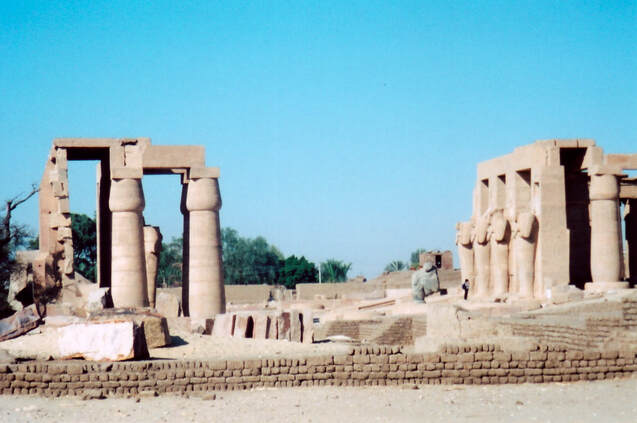  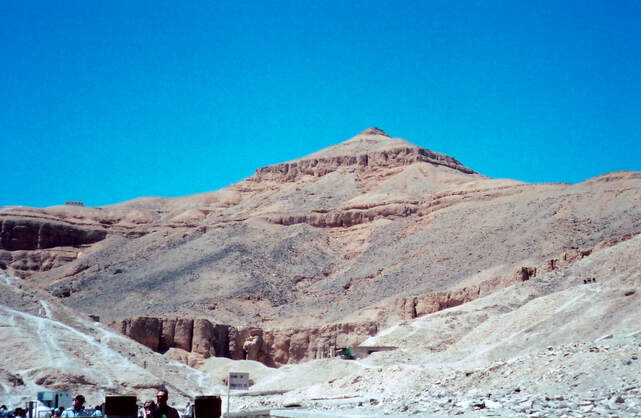 Look out for a blog post every day this week where we will continue to explore all three books and their locations! Don't forgot to share the posts and support other authors in the #IndieAuthorWeekUK hashtag across social media.
Chrissie is an author who loves history and enjoys travelling and days out exploring. www.chrissieparker.com/books
 Whilst visiting Eilat, in Israel (separate post about Eilat coming soon!) we border hopped into Jordan to visit the ancient city of Petra. It was a very early start and the coach trip up the Kings Highway took a few hours, but it was a trip that would prove to be worth it. Jordan is a great country, an expanse of dusty red/brown desert that rises and falls stretching on for endless miles. Mountains line the roadside, only punctuated by the occasional site of a Bedouin tent and its occupants. Arriving in Wadi Musa, the small town where Petra is located, we joined our guide and followed him as we walked through the gates into Petra National Park. Nothing can prepare you for what you see as a visitor, neither can you truly describe to others how incredible Petra is. At first it doesn’t seem like much as you walk a dusty, open path with not much on either side, save for rocky inclines. After ten minutes or so however, you happen upon the Triclinium tomb and some Djinn blocks – ancient structures built by the original inhabitants the Nabataeans 2000 years previously – the first sign of what is to come. They are impressive, but you wonder if it was worth the visit, but the trip doesn’t end there. The path continues steadily on, and suddenly it plunges down through a crack in a rock, between two large edifices of pink stone, once sliced open by an earthquake. Along this path you begin to catch remnants of ancient reliefs, carvings, cobbled flooring, and an ancient water irrigation system, as you marvel at the incredible gorge that nature created.  Suddenly, without warning, the path ends and that’s when your visit to Petra really begins. At the end of this gorge stands the impressive El Khasneh (The Treasury), an ancient temple built by the Nabataeans. Turning to your right you suddenly discover that it’s just the first of many ancient sights, as your vision fills with the remnants of ancient tombs, temples, and rock-cut houses. Seeing and experiencing Petra was something I’ll never forget. Petra is a huge ancient city, albeit in a semi-ruinous state, that had belonged to the caravan people who had worked the old spice road, around 2000 years ago. Many of its buildings were carved directly into the rock face which meant they haven’t been destroyed by earthquakes and are still visible. Sadly, not all the city survived though, and the central part is ruinous. Despite that, it’s an incredible place to explore, and just when you think you have finished seeing everything, you find another sight to marvel at. There are the Royal Tombs, Colonnaded Streets, a Roman Amphitheatre and The Monastery, the list is endless and there is so much to see and experience. The rich colourful rock, giving Petra it’s nickname of the Rose Red City, is so vibrant in places and marbled in texture, mixed through with hues of white and grey. You really do get a fascinating insight into the people who built the city and used to live there. No vehicles are allowed into the ancient city, and so most visitors make the trip down on foot, but there are horses, camels and horse drawn carriages for those who need transport. I love Petra, it’s in my top three of favourite places visited and I hope to be able to go again one day. Today the site is well looked after and protected and sits on the UNESCO World Heritage Site list. It’s a place that many don’t know exists, a hidden historical gem in the Jordanian desert, and one that is worth visiting and will welcome visitors with open arms. 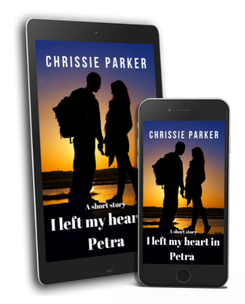 Look out for a blog post every day this week where we will continue to explore all three books and their locations! Don't forgot to share the posts and support other authors in the #IndieAuthorWeekUK hashtag across social media.
Chrissie is an author who loves history and enjoys travelling and days out exploring. www.chrissieparker.com/books
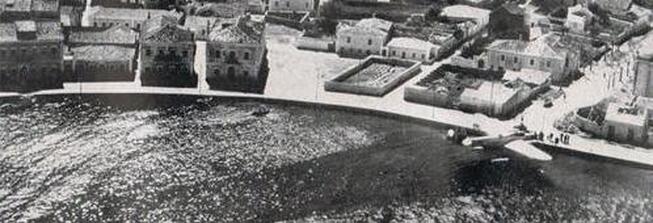 On the 30 April 1941, a Cant-Z-506B seaplane was spotted in Kefalonia’s harbour by Greek residents. The plane was piloted by Italians and its arrival was the start of the Italian invasion of Kefalonia during World War Two. The plane was one of five seaplanes that had taken off from Brindisi, and they were followed by three transport aircraft that contained sixty Italian parachutists. On the 01 May 1941, two Cant-Z-506B seaplanes landed at Zakynthos. More Italian troops swiftly followed, landing on the island by boat, formally occupying the island. It was a day that islanders had dreaded. Zakynthos and its residents had no choice but to “fall” to the Italian soldiers becoming part of the ever-growing list of occupied territories overseen by the Axis powers. The island of Zakynthos and her neighbouring Ionian islands remained prisoners of the Italians, until fascism fell in 1943. Hopes were high of the war ending in 1943 but things didn’t get better for Greece. They were quickly invaded by the Germans and much of the country, including Zakynthos, found itself under German occupation by September 1943. The war continued to rage on, and Zakynthos wasn’t liberated from its captors until 12 September 1944. During World War Two Occupation Italian soldiers based themselves in Zakynthos Town. They brought in laws that included no cigarettes or tobacco to be brought to Zakynthos without permission, they forbid sale of wheat, no islander was allowed to keep weapons and it was illegal for Zakynthians to write cheques. Italian soldiers regularly searched homes and any weapons, food, oil, or wheat discovered by the soldiers were immediately confiscated. The Italian Army received daily supplies of food and other items, but they were for army use only and not for Zakynthians. The German Headquarters were in Kipi, but they also had bases throughout the island, if the Germans chose to base themselves in a property already owned by a Zakynthian family, the family were forced to hand the house and its belongings over to the enemy. The only place on the island free from Germans and Italians was the mountains, which was a Resistance stronghold.  If islanders had thought the Italians were bad, life under the Germans were much worse. They stole from locals, disallowed them to cultivate their own food, were inhumane in their general behaviour, rounded up locals and killed them for no reason, and regularly abused women. Zakynthians did their best to resist their captors and The Resistance movement was a strong one, made up of both men and women. Based in the mountains The Resistance fought against the Italians and Germans whenever possible, but it wasn’t easy, and many paid for their bravery with their lives if they were caught. The Resistance received news of the war by using hidden radios and connections with newspapers in Athens, which allowed them to plan movements against their captors. Life on Zakynthos during the war was incredibly hard. Food was sparse, the Germans ruthless and many islanders had to sell belongings, including furniture and jewellery just to survive. Many went hungry, and life was lived on a continual knife-edge of hunger, desperation, and fear. Zakynthians were monitored wherever they went, there was no work as companies were forced to close, and many islanders ended up begging for food or buying it on the black market just to survive. There are many stories of Island bravery. Men and women who did their best to protect their own, who tried to stop the Germans from looting, stealing, and abusing residents, who fought hard against their oppression whenever they could. Some were successful, others were not. The bravest story of Zakynthos during World War Two is the story of Bishop Chrysostomos and Mayor Loukas Karrer. On 09 September 1943, Commandant Berrenz, the German Commandant of Zakynthos at the time, demanded a list of all Jewish Island residents from Bishop Chrysostomos and Mayor Loukas Karrer. The Mayor and Bishop presented Commandant Berrenz with a list of just two names: their own. They refused to give up the Jewish population and went as far as protecting and hiding all 275 Jewish Island residents, with help from The Resistance. The bravery of the Mayor and Bishop saved many lives and ultimately saw them become heroes of the war. A lasting memorial to them now stands in Zante Town. Nowadays there isn’t much evidence of the war on Zakynthos, but if you know where to look there are still a few small signs. The main Zakynthos airport is situated on the site of the original airfield constructed by the Italians. It was built not long after they arrived so that troops, weapons, and ammunition could be flown to the island rather than bringing them by boat. In the north at Exo Hora there is an old Venetian watchtower that was used by the Italians as a base. A smaller watchtower, also used as a lookout, is situated on the east coast at Kipseli. A few World War Two ruins, such as a stone gun placement still exist on the south east of the island but the German pillbox on the cliffs at Kalamaki has now fallen into the sea. Remains of German fortification are also rumoured to be found at the north of the island. At Kampi there is also a large cross dedicated to those who lost their lives during both World War Two and the Civil War that followed. Ask any local though, and they can give you information about specific places on the island that have stories of the war associated with them. Much of what happened on Zakynthos during World War Two now lives in the minds, hearts, and accounts of those who lived through it, and sadly they are becoming fewer as time passes. We should never forget that the island is what it is today because of the bravery of those who fought hard for their families, their island and ultimately, their freedom. 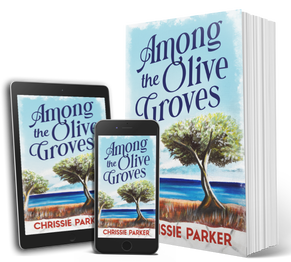 Look out for a blog post every day this week where we will continue to explore all three books and their locations! Don't forgot to share the posts and support other authors in the #IndieAuthorWeekUK hashtag across social media.
Chrissie is an author who loves history and enjoys travelling and days out exploring. www.chrissieparker.com/books
 Egypt is a great country steeped in thousands of years of history and culture. I’ve loved reading and learning about it since I was young, and I’ve also completed two Egyptology courses with Exeter University. I try to impart to people what an amazing place it is, but words never seem to wholly do it justice, I always say, the only way to learn about a country is to go and see it for yourself. Egypt is filled with culture and history. Modern day life sits neatly alongside ancient monuments that are thousands of years old. Contrary to some reports Egyptians are friendly accommodating people who will welcome you with open arms and make you feel at home. We all know about the famous sites such as the Sphinx and the Pyramids of Giza, but there are many more magical places to see in Egypt. There’s the fantastic mortuary temple at Medinet Habu in Luxor that has some of the best coloured reliefs, and accounts of Egyptian life I’ve ever seen. Or there’s the temple of Isis at Philae, a beautiful temple that only stands today thanks to rescue work undertaken many years ago by UNESCO to save it from flooding and being lost forever. If you have the time you could journey to the edge of Egypt itself to gaze upon the awe-inspiring Abu Simbel, a sight that just takes your breath away and leaves you wanting more. The list is endless, with so many temples, tombs and other ancient sites spread throughout the Country, you’re spoilt for choice.  Egypt also has many museums to house its collection of treasures. The largest is the Egyptian Museum in Cairo which contains artefacts from Tutankhamun’s tomb, as well as items belonging to the heretic King Akhenaten, and if you have a penchant for the gorier side of life you can gaze upon a well-preserved collection of mummified bodies of Royalty past. In Luxor there are two museums, the aptly named Luxor Museum housing treasures found during excavations in Luxor and Karnak, and the Mummification Museum, where every item is dedicated to the ancient art of preserving the dead for the afterlife. If you get bored with the history, and I promise you, you won’t, you could meander your way through the many shopping streets and bazaars bartering for some interesting souvenirs, or beautiful hand-crafted goods, whilst accepting a friendly stallholder’s hospitality of a glass of hibiscus tea. If this isn’t to your taste the luxurious Winter Palace Hotel in Luxor is an ideal place to have a break for a relaxing lunch overlooking the Nile. I could go on. There are so many incredible things to see and do in Egypt, whether you choose to visit Cairo, Luxor, or venture further south to Aswan. You could even combine all three by leisurely cruising down the Nile on a Dahabeeyah. There’s more to see and do in Egypt than you could ever fit into one visit, and you’ll be welcomed with open arms and feel at home in a country that was just made to be discovered. If that hasn’t persuaded you then just imagine stepping onto a felucca, and relaxing as you sail serenely along the Nile, watching the beauty of Egyptian life passes you by, as the sun slowly sets leaving you with a bright shining moon and twinkling stars to guide you gently back to shore. 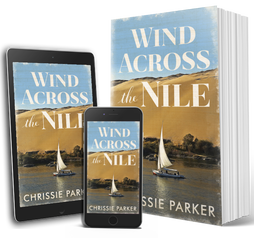 Look out for a blog post every day this week where we will continue to explore all three books and their locations! Don't forgot to share the posts and support other authors in the #IndieAuthorWeekUK hashtag across social media.
Chrissie is an author who loves history and enjoys travelling and days out exploring. www.chrissieparker.com/books
 Welcome to the first day of the Indie Author Week UK, Book Location Tour! The tour will highlight some of the great locations in my books:
Explore Egypt! Wind Across the Nile spans four generations and immerses readers into an Egypt of days gone by, as well as showing them modern day Egypt. It's a book about family heritage and bonds, adversity, and self-preservation. There are many locations in the book. The main action takes place around the town, tombs, and temples of Luxor. Readers will also be introduced to the City of Cairo and Aswan further down the Nile. Book Description of Wind Across the Nile Can she survive where her ancestors failed? Suffering with grief after the tragic death of her family, Cora Thomas flees to Egypt, desperate to escape the overwhelming loss. In Luxor, she meets gruff Egyptologist Nick Foster who wants little to do with her, and his employee Sam, who instantly becomes a much sought-after friend. As she settles into life along the Nile, discovering the country’s vast history and culture, Cora learns about the contents of an old diary discovered in her parents’ home. As the diary’s story unfolds, it reveals hardship, love, tragedy, and a potentially life-threatening family feud spanning generations. From the rolling hills of the Scottish Highlands to the ruinous sands of the Egyptian desert, Wind across the Nile is a story of unbreakable family bonds, adversity, and self-preservation. Wind across the Nile is a perfect story for fans of historical fiction, historical mystery, and historical suspense, as well as those who love travelling to Egypt.  Explore Greece! Among the Olive Groves is a dual timeline set on the Greek island of Zakynthos during the Second World War, as well as modern eras. It’s a book about bravery, love, sacrifice and family bonds. There are lots of locations in the book. The main action takes place around the island of Zakynthos in well-known areas. Readers will also be introduced to Bristol and Cornwall in the UK. Book Description of Among the Olive Groves Will her bravery protect the ones she loves? Elena Petrakis adores living on the Greek island of Zakynthos. When World War Two looms her way of life is threatened. Left with no choice she joins the island’s resistance to fight for what she believes in; her family, her home, and her freedom. Decades later, thousands of miles away in the Cornish town of Newquay, Kate Fisher prepares to celebrate her twenty-first birthday, but her joy is fleeting when she learns she is adopted. Abandoning life in England, Kate flees to Zakynthos, where she is forced to acknowledge a life she has struggled to come to terms with, one that will change her future. From the beautiful crystal turquoise seas of the Ionian Islands to the rugged shores of the Cornish coast, ‘Among the Olive Groves’ is a story of love, bravery and sacrifice. It's a perfect story fans of dual timeline, historical fiction, historical mystery, and historical suspense, as well as those who love travelling to Greece.  Explore Jordan! I Left my Heart in Petra is a fast-paced short story originally written for the Sunlounger Short Story Competition in 2013. It introduces readers to the wonderful enigmatic ancient site of Petra. Readers will be introduced to the stunning sights of the ancient City of Petra. Book Description of I Left My Heart in Petra When Maisie learns she’s being sent on a new assignment, somewhere hot and sunny, she’s delighted to be leaving the cold UK behind her. What she hadn’t expected however, was to end up in the middle of the Jordanian desert. Out of her depth in an unfamiliar country, Maisie has no choice but to throw herself into the job, determined to do her best despite being hit by numerous problems. I left my heart in Petra is a fast paced, fun short story set in the stunning historical site of Petra in Jordan. It's a perfect short story for fans of contemporary fiction, romantic fiction, and historical fiction, as well as those who love travel and Petra in Jordan.  Keep and eye out for a blog post every day this week where we will continue to explore all three books and their locations! Don't forgot to share the posts and support other authors in the #IndieAuthorWeekUK hashtag across social media.
Chrissie is an author who loves history and enjoys travelling and days out exploring. www.chrissieparker.com/books
 Under the streets of the Guildhall Yard in the City of London is a hidden ancient gem that many people don’t know exist. In 2015 I visited this incredible site to explore it and learn more. Buried deep beneath the London streets, accessed via the Guildhall Gallery building, are the remains of a vast Roman amphitheatre, discovered by Museum of London archaeologists in 1988. The paving stones outside the building give a tantalising glimpse of what lies beneath with a large oval of black slabs showing just how large it is. At the time of discovery, an archaeological excavation was taking place on the site, with a view to building a new Art Gallery. What archaeologists found were the remains of a Roman Amphitheatre, the discovery meant that the site of the Guildhall yard became a protected historical site, so it was agreed to incorporate the remains into the new Art Gallery. Entering the building you follow signs, heading downwards into what feel like the depths of the earth, until you reach two wooden doors simply marked “Roman Amphitheatre”. Inside is a vast dark space, with walkways between ancient walls. On the floor are see through covers with ancient wood structures on view. At the far end is a luminous green matrix depiction, showing figures of people and how high the levels of the amphitheatre may have been. There are also boards around the site explaining the amphitheatre and what the finds are such as walls walls, the east gate and part of an original stone entrance tunnel. Exploring the site is so interesting, and it’s amazing to see how this site has remained buried and protected from modern building practices and disturbance. The discovery and continuing excavations of the site are a must-see glimpse of ancient Roman Britain for any visitor to London, so if you love the ancient, then add this to your list of things to see and do. It’s definitely worth it! For more information, visit the City of London Website All photos taken by Chrissie Parker
 It’s finally here! The launch of book 3 of the Life is Yours Trilogy by Abigail Yardimci. Book 3, Everything is Yours, follows on from Life is Yours (book 1) and Destiny is Yours, (book 2) Like all good book series, I was hooked from book 1, Life is Yours. I initially downloaded the first book Life is Yours, because the cover intrigued me. The story however intrigued me more! By the time I’d finished reading Life is Yours I knew I was hooked and the rest of the series just had to be read. Now with the release of Everything is Yours, the series is complete. It was an incredible series and one I know I will repeat read. I just wish it wasn’t over! Everything Is Yours (Book 3 of Life is Yours series) New Year’s Eve is in full swing. Jess and Lindy have met by chance and already they’re sharing a bottle of wine in a cosy Turkish restaurant. Lindy is hooked on a story Jess is telling, but midnight is coming, and happy endings aren’t always guaranteed . . . After Jess returns from the trip of a lifetime high on hope, ambition and new love, she’s ready to take on the world. She shuts down her business, cuts ties with her ex and announces to everyone the old her is gone. But a violent encounter rocks her world, and her past comes crashing back to haunt her. With a childhood demon to forgive, a long-distance relationship to navigate and that final layer of self-love to uncover, can Jess dig deep and put the final pieces in place before midnight comes knocking?  Everything is Yours Review I loved this book, and it was great to find out what happened in Jess's story. It's heart-warming and at times completely relatable. I've absolutely loved reading this series. It stands out from many others in its genre. It's intriguing and interesting. It’s not formulaic, takes on a journey all of its own, that's full of substance, great characters, and a story that just draws you in and won't let go. It's a book about love, but more than that, it’s a book about life, self-discovery, and what we can do if we step outside of our comfort zone and embrace who we truly are and meant to be. Abigail Yardimci has such a great way with words. She’s a born storyteller. Whatever she writes, from books to blogs, hits you full on. Her writing tumbles around your brain and leaves you wanting more. There is a frank honesty veiled with comfort and love, and it’s uniquely refreshing. Thank you for such a great third book and wonderful series. There is a loss now that the trilogy is over, but I know this won’t be the last we’ll see of Abigail. In the meantime, enjoy Everything is Yours and the Life is Yours series, I highly recommend it! series or Abigail Yardimci as an author head over to her website: To learn more about Everything is Yours, the Life is Yours series or Abigail Yardimci as an author head over to her website: www.abigailyardimci.com You can also follow Abigail on social Media: www.facebook.com/AbigailYardimci www.twitter.com/AbigailYardimci www.instagram.com/abigailyardimciauthor More reviews can be found on the Everything is Yours blog tour!  In 2018, I wrote this short post for my Facebook, but I feel it's important to share it today, as it's still as valid. It's simply entitled 1918 -2018. 1918-2018 The world rushes by, we forget to remember. The young sit on a brick wall scrolling their phones, and don’t remember. The man drives his car late for his meeting, he doesn’t remember. The woman sits at her desk typing, she has no time to remember. The freedom of them all belongs to actions from the past. We all need to stop. We all need to remember. Without remembering we wouldn’t be what we are today. Without remembering those who fought for us, enduring the mud, stench and filth of a trench, the pounding, booming horror of a battlefield, the frightened adrenaline of not knowing what was coming next, when it would end or if that day would have all been in vain. They were the heroes, the defenders of our future, the people who shaped the life we are now free to live, and we own them our gratitude. History matters. The Young should be taught, the parents should remind and we should all be grateful for what our ancestors did for us today. Many of those brave heroes never got to live for long, love or have families of their own. Their short lives ended on a battlefield. If we remember just one thing it should be to learn from the past and never makes the same mistakes again. Life is precious. Life isn’t about conflict, division or hatred. Life is about beginnings, working together and peace, and this is why we remember 100 years on. ~ Chrissie Parker, 1918-2018, one hundred years.   Throughout our lives, we go through numerous changes. Some changes are of our own making, others are forced upon us. When they're of our own making we feel euphoria and excitement. We look forward to the new chapter in our life, wondering where it'll lead us, and what fulfilling experiences we'll gain from it. When change is forced upon us by an unknown or unexpected entity however it can bring on a host of emotions; panic fear and stress. Writing Among the Olive Groves was a huge challenge for me, as the entire book is about change, facing fears and characters searching for their identities. Elena Petrakis, one of the book's main characters, lives a quiet and peaceful existence on a beautiful Greek island called Zakynthos. It's the only home she's ever known. It's a laid-back idyll in the middle of the sea relatively untouched by the outside world. The real world seems a lifetime away and her life is normal and uncomplicated, full of tradition. Elena sees wonder in everything, be it the dawning of a new day, the blossoming of flowers, or the ripening of olives. Suddenly World War Two hits and life changes for Elena and her family. They are forced into situations they never dreamed possible. Bravely Elena decides to fight against their invaders to protect the things that are most important to her; her family, her home and her freedom.  In the process of writing this book, I did lots of research to try and understand what Elena would have gone through. I read books about World War Two, the Greek Resistance, and what women, in particular, went through during the war. Nothing could have prepared me for what I learned. I was amazed at how many Greek women joined the resistance, to fight against their oppressors. It was one of the few ways they could help. Many of them put their lives and those of their families on the line, and not all of them survived. Even if they did survive they were never the same. Nowadays we tend, as a society, to take life for granted. Most of us can do what we want when we want. We have endless amounts of technology at our fingertips to help us out with everything from instant communication, to buying food, to getting around. Life is easy, food, on the whole, is plentiful, and most of the time we control change. In comparison to those who lived during World War Two, we have it incredibly easy. So how would it feel for the world you know to suddenly crumble around you? For your way of life to completely change. To lose your identity, be made a prisoner of your own town/village/island. To be put under curfew, to have your food and consumables rationed to the point of almost being non-existent. To feel desperately hungry all the time. To fear for your life and those you love. I've no idea how I'd react. I don't think many people do. In some small way, though, I'd like to think I'd be like my character Elena. I'd hope that I'd find the strength she did, to fight for myself, to fight for my family and my beliefs, despite the consequences. So when we go through life day by day, getting up, going to work, visiting our family popping to the pub with friends, we should remember those people who had their lives overturned by the changes of war. We should think of those people who sacrificed their lives and showed incredible bravery so we can live our lives the way we do nowadays. We should also remember that change can happen at any time. We all have to hope if it does, we'll have the freedom to manage it and live through it. We'll all have to be brave like those who came before us and remember the important things in life, our families, homes, and freedom. AMONG THE OLIVE GROVES Get your copy of the book now! Buy - Amazon Kindle version Buy - Amazon Paperback version Buy - Apple (iTunes) version Buy - Barnes and Noble Buy - Kobo version To order/buy in a bookshop, quote: ISBN: 978-1-9164025-4-6  |
AuthorWelcome to my blog, My occasional ramblings will take you on a journey through many subjects, from my books, to history, as well as what it's like to be a writer and my love of travelling! Enjoy the updates! Archives
July 2026
Categories
All
|


 RSS Feed